

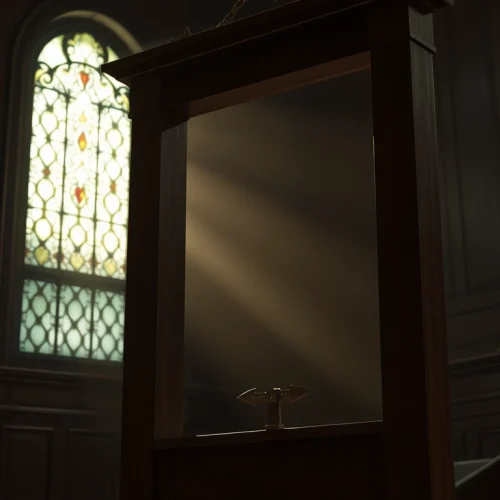
The Historical Context of the Guillotine Origin Phrase
The guillotine, a revolutionary instrument of execution, has a history deeply entwined with the socio-political landscape of late 18th-century France. The phrase guillotine origin phrase covers not just the physical device but also the ideological shifts that accompanied its introduction. Understanding its origin involves delving into the roots of capital punishment, the influence of Enlightenment thinking, and the contributions of notable figures in its development.
The Roots of the Guillotine in French History
The guillotine’s origin can be traced back to a period of great social unrest in France. The late 1700s marked the culmination of various socio-political tensions that ultimately led to the French Revolution. Prior to the introduction of the guillotine, execution methods were often brutal and inconsistent, varying from hanging to burning at the stake. These methods reflected a society grappling with justice’s moral and ethical complexities.
The guillotine emerged as a symbol of change, particularly representing the people’s desire for a more equitable system of justice. Its design aimed to ensure swift and relatively painless death, a stark contrast to the torturous executions of the past. The instrument was first introduced in 1792, during a time when the Enlightenment ideals—valuing reason, equality, and the rights of individuals—were increasingly influential in societal structures.
Influence of the Enlightenment on Capital Punishment
The Enlightenment era brought forth significant discussions about human rights and the nature of just governance. Thinkers such as Montesquieu, Rousseau, and Voltaire criticized the arbitrary nature of power and advocated for reforms in judicial practices. The prevailing thought was that capital punishment should reflect society’s moral and ethical standards, promoting humane treatment over barbarism.
It was within this context that the guillotine was embraced. Early advocates believed this method could unify and democratize the experience of death, as it was leveled for all, regardless of social status. As such, the guillotine was not merely a tool for execution; it symbolized a shift towards Enlightenment values where justice sought to be more equitable.
Joseph Guillotin’s Role in the Guillotine’s Development
One of the most significant figures associated with the guillotine is Joseph-Ignace Guillotin, a physician and politician who proposed the use of this device as a humane method of execution. Despite his intentions of advocating for the humane treatment of those condemned, the guillotine became forever linked to his name. In fact, Guillotin did not invent the device; rather, he supported its adoption within the legal framework of France.
Guillotin’s petition in the National Assembly highlighted the need for a more efficient and less painful method of capital punishment. His advocacy was compelling enough to garner legislative support, resulting in the formal adoption of the guillotine as the standard execution method in France. Ironically, Guillotin himself was said to have opposed the death penalty, yet his efforts contributed to a tool that implemented it with startling efficiency.
Understanding the Guillotine’s Design and Function
The guillotine’s design and engineering have become subjects of fascination as well as horror throughout history. Its functionality is rooted in simplicity, yet its implications are profound, invoking discussions about justice, morality, and societal norms.
Mechanism and Engineering of the Guillotine
The guillotine comprises a tall, upright frame with a weighted blade that slides down vertically within grooves. This design allows for a precise and instantaneous severing of the head upon execution. Its mechanics were intended to embody efficiency—a significant improvement over previous methods of execution. The blade, often described as ‘razor-sharp,’ is capable of swiftly severing the head with minimal suffering, aligning with the ideals of a rationalized approach to capital punishment.
The apparatus uses gravity to enhance the speed and effectiveness of its execution; the blade is dropped from a considerable height, further emphasizing the device’s engineering brilliance. While it was initially hailed for its humane qualities, the execution itself remains one of the most enduring and gruesome symbols of injustice and the death penalty.
Comparison with Other Execution Methods
To fully appreciate the guillotine’s design, we must compare it to historical execution methods. Prior techniques such as hanging or drawing and quartering often resulted in prolonged agony and suffering. For instance, hanging could either lead to slow strangulation or a prolonged drop that failed to cause instant death.
In contrast, the guillotine’s instant decapitation was designed to mitigate suffering, serving as a clear response to critiques of prior methods. This aspect positioned the guillotine at the forefront of discussions on the morality of capital punishment, as it seemingly represented a step towards a more humane society. However, subsequent interpretations often highlighted the resulting dread it instilled within society, juxtaposing the historical ideology of humanity with brutal reality.
Symbolism of the Guillotine in Society
The guillotine has come to symbolize more than just an execution tool; it suggests complex themes of power, equality, and justice. While it was initially designed to reflect Enlightenment ideals of equality in death—where the nobility and commoners faced the same fate—it became a stark reminder of the excesses of the French Revolution. The guillotine’s utilisation during times of socio-political upheaval resulted in it being seen as both an instrument of justice and oppression.
This duality in perception often highlights the conflict between revolutionary ideals and their practical applications. It stood as an enforcer of state power, a grim reminder that even in a society questioning moral grounds, the state still holds ownership over life and death. As such, the guillotine transcended its initial purpose, becoming an enduring symbol of revolutionary fervor and, tragically, a testament to the darkness that can accompany societal change.
Evolution of the Guillotine Origin Phrase Over Time
The guillotine origin phrase reflects historical narratives, cultural significances, and literary references that have morphed over time. Understanding its evolution offers insights into how language and culture respond to societal changes and historical events.
Early References and Usage in Literature
The terminology associated with the guillotine has appeared in numerous literary works since its invention. Early references often depicted the guillotine as a symbol of both terror and justice, reflecting the societal anxieties surrounding the power of the state. Literary figures, including Charles Dickens, often utilized the guillotine metaphorically, exploring themes related to oppression, fear of authority, and the fragility of life during tumultuous times.
One particularly powerful reference can be found in works that sought to dramatize the atmosphere of fear prevalent during the Reign of Terror. The guillotine served as an omnipresent reminder of the potential consequences of dissent and the precariousness of life under revolutionary fervor, a theme that resonates through the ages.
Modern Interpretations and Misconceptions
In contemporary discourse, the guillotine origin phrase has been interpreted in various ways, often shaped by modern understandings of justice and human rights. Misconceptions about the guillotine commonly circulate, including myths surrounding its ‘humane’ nature or its widespread use as a symbol of justice.
This phrase has often been misappropriated in popular culture, where the guillotine increasingly symbolizes authoritarianism or the inhumanity of state power. The imagery evoked by the guillotine often finds its way into discussions about capital punishment, revealing a modern aversion to, and critique of, historical practices. Thus, the guillotine’s legacy remains entangled with debates about morality, justice, and human dignity, reflecting evolving societal standards.
Guillotine in Popular Culture and Media
The guillotine’s influence has transcended literature and into various forms of pop culture, including film, television, and art. Films depicting the French Revolution frequently utilize guillotine imagery to evoke emotions of chaos and fear associated with upheaval. In contemporary media, the guillotine often appears in discussions around capital punishment, representing society’s ongoing struggle with the ethics of death penalties.
Moreover, the guillotine has been featured in theatrical and artistic representations, where it symbolizes rebellion against oppression or an exploration of human morality. The stark visual impact and historical weight of the guillotine continue to evoke strong emotional responses while also shaping discussions around justice. Whether serving as a metaphor for state violence or a literal representation of punishment, the guillotine remains a powerful symbol in modern culture.
The Controversial Legacy of the Guillotine
The guillotine, as a symbol of capital punishment, brings forth a complex legacy that invites continued discussion on human rights, ethical frameworks for justice, and psychological perceptions of violence. Evaluating this legacy requires engaging with its broader implications for society and the ongoing debates surrounding capital punishment.
Impacts on Human Rights Discussions
Since its inception, the guillotine has been a focal point in conversations about human rights and the moral implications of capital punishment. Supporters of abolition often cite the guillotine as a prime example of how state-sanctioned death can become a tool of oppression rather than justice. This perspective aligns with modern human rights advocates’ views, emphasizing dignity and the sanctity of life.
The guillotine’s historical usage raises critical questions about whether any form of execution upholds a society’s moral integrity. As international human rights norms evolve, the guillotine illustrates the ongoing struggle between historically ingrained practices and contemporary understandings of justice, dignity, and ethics.
Morality of Execution Methods: Historical Debates
The morality of execution methods has been a longstanding debate within philosophical, legal, and psychological circles. With the guillotine embodying both efficiency and brutality, it has sparked discussions about whether any method of capital punishment can reconcile with humane treatment. The Enlightenment ideologies that birthed the guillotine championed reasoned debate and rational governance, yet history shows that the device quickly became synonymous with fear and repression.
Proponents of the death penalty often focused on deterrence as a rationale, yet historical evidence suggests that the guillotine, rather than deterring crime, instilled a culture of fear. This contradiction places the guillotine at the heart of the moral debates surrounding capital punishment, emphasizing the urgent need for a re-evaluation of execution methods in light of evolving human rights standards.
Emotional and Psychological Perspectives on the Guillotine
The psychological implications of the guillotine extend beyond the act of execution itself. For society, it symbolizes the profound tensions between justice and vengeance, order and chaos. The horrifying nature of the guillotine causes considerable psychological unease and raises questions about societal attitudes towards punishment and accountability.
The chilling notion that a state apparatus can decide life and death often evokes trauma and fear within communities. As history has evidenced, the guillotine’s significance captures the complexities of social interactions and justice, making it an enduring topic for psychological exploration and critique. These layers of psychological perspectives highlight the enduring implications that the guillotine has had on collective conscience and societal narratives.
FAQs About the Guillotine Origin Phrase
What is the guillotine origin phrase?
The guillotine origin phrase refers to the historical tool used for executions, named after Joseph Guillotin, associated with its implementation in France.
Where did the guillotine originate?
The guillotine originated in France and was approved as a method of execution during the early 18th century, primarily during the Revolution.
Why was the guillotine invented?
Designed for humane execution, the guillotine was intended to deliver swift death, reflecting the Enlightenment ideals of rational justice and individual rights.
What does the term ‘guillotine’ mean historically?
Historically, ‘guillotine’ refers to a device engineered for decapitation, embodying the harsh realities of capital punishment in Revolutionary France.
Is the guillotine still in use today?
No, the guillotine is not in use today; it has been abolished due to changing societal views against capital punishment in most parts of the world.